Learn
A deeper look at gopher tortoises and the world they depend on
Explore the habitats, plants, wildlife, and changing landscapes that shape the life of this remarkable species.

A deeper look at gopher tortoises and the world they depend on
Explore the habitats, plants, wildlife, and changing landscapes that shape the life of this remarkable species.

Explore the habitats, plants, wildlife, and changing Florida landscapes that shape the life of this remarkable keystone species.

Explore the range of habitats gopher tortoises live in, from sandhills and scrub to coastal systems and beyond.

Learn what gopher tortoises eat and the native plants that support them.

Discover how tortoise burrows create homes for 350+ other species.

See how fire shaped Florida’s uplands and why it still matters today.

Learn about the challenges gopher tortoises face, including invasive plants, development and habitat loss.

Practical tips for homeowners, landscapers and communities.

Meet some of the amazing wildlife that rely on gopher tortoise habitat.

Learn how your photos and observations help track changes and support conservation.
Every observation becomes part of a growing scientific record that helps researchers protect gopher tortoises, identify critical habitat, and guide conservation efforts. With an estimated 80% population decline over the last 120 years, every observation matters. Together, we’re helping conserve one of Florida’s most important keystone species and the more than 350 species that depend on its burrows.

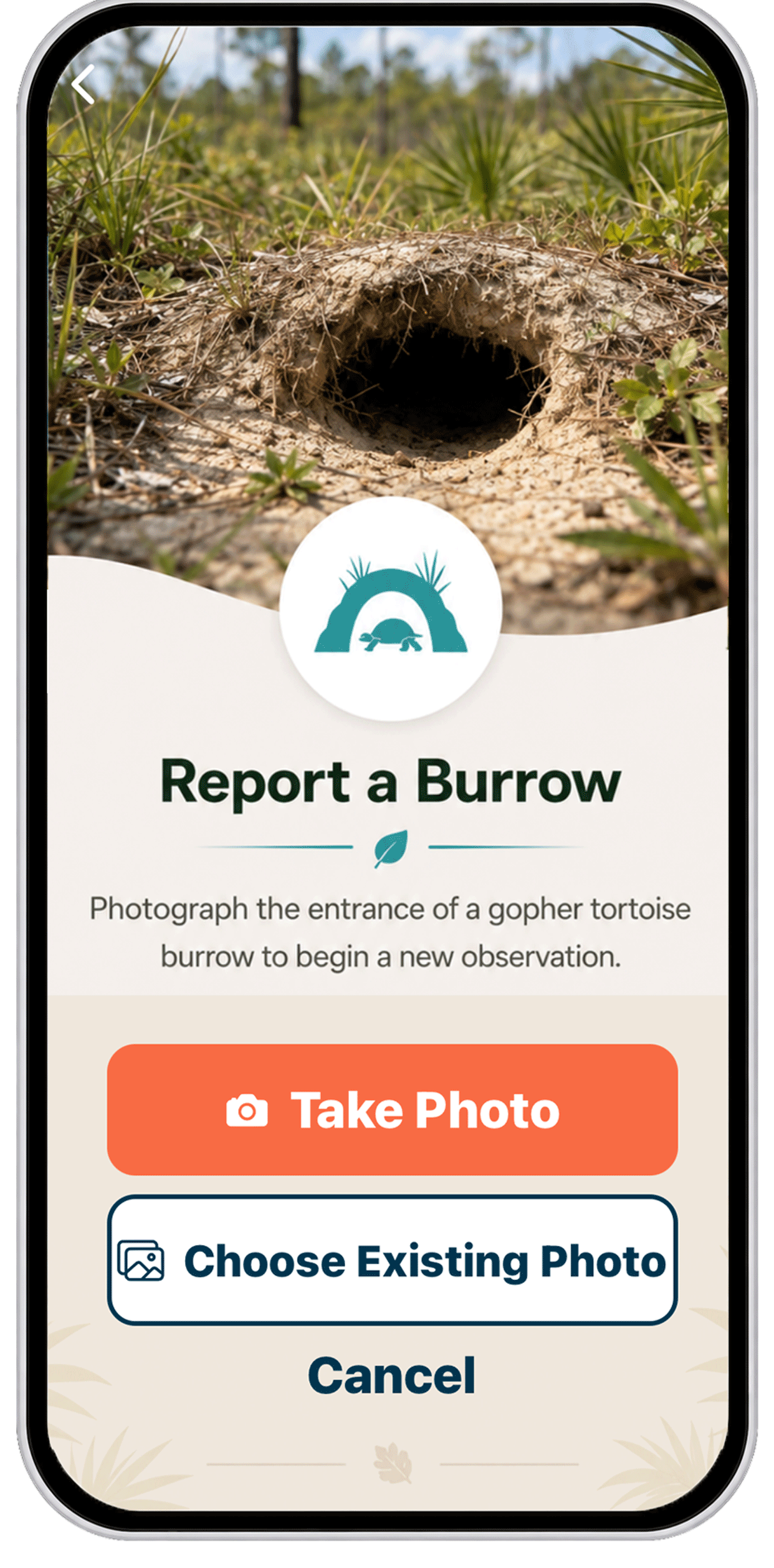
Every burrow is a window into the health of the surrounding habitat. Your observations become part of a growing scientific record that helps scientists monitor habitat quality, identify conservation priorities, and guide restoration efforts. By better understanding healthy habitats, we can all make smarter choices in our own yards, neighborhoods, and communities.
What is Gopher Tortoise Watch?
Gopher Tortoise Watch is a citizen science app that empowers anyone to help protect gopher tortoises by documenting tortoises, burrows, and habitat observations. Every observation contributes to a growing conservation database that supports research, education, habitat management, and long-term wildlife monitoring.
Why should I use the app?
Whether you report one tortoise or hundreds, your observations help build a better understanding of where gopher tortoises live, how their habitats are changing, and where conservation efforts can have the greatest impact.
Who can use Gopher Tortoise Watch?
Anyone can participate. You don’t need to be a scientist or have previous experience. If you enjoy spending time outdoors and care about wildlife, you can make a meaningful contribution.
How do I report a gopher tortoise?
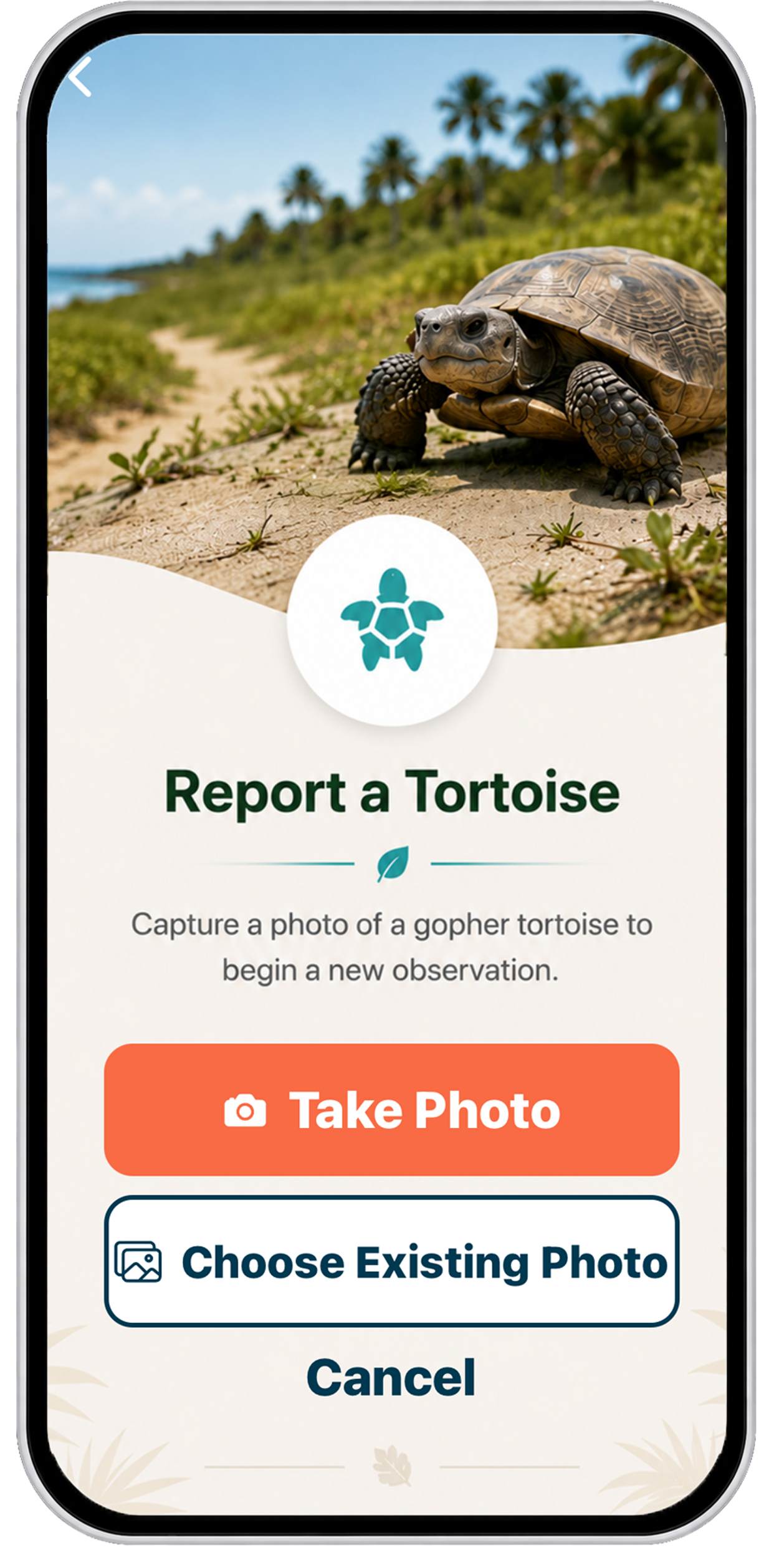
1. Tap Report a Tortoise.
2. Take or upload a photo.
3. Confirm the location.
4. Answer a few simple questions.
5. Submit your observation.
The entire process usually takes less than a minute.
Why do you ask for a habitat photo?
The surrounding habitat tells an important part of the story.
Vegetation, ground cover, canopy, and nearby landscape features help us better understand why some burrows thrive, identify important habitat features, and monitor how habitats change over time.
Whether you have a question, an idea, or just want to share some feedback, we’d like to hear from you.